
How Common is Vibrio in Oysters?
IMPORTANT INFORMATION
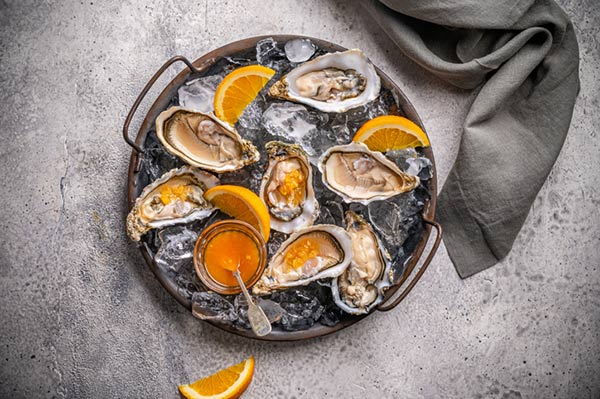
For many people, oysters are a beloved delicacy. We’re not here to spoil the fun, but we do believe that knowledge is power.
These statistics can help you to better understand your risk and stay informed about the dangers associated with eating raw oysters and other vibrio-prone shellfish.
Unfortunately, there isn’t a wealth of up-to-date information available on Vibrio vulnificus. Much of the existing data is somewhat dated, which only highlights the lack of awareness about this serious and often overlooked danger.
INFECTION RATES
Total Vibriosis Cases
Total Vibriosis Cases: Each year, the U.S. sees approximately 80,000 cases of vibriosis, most of which result in mild gastroenteritis.
Severe Cases
Severe Vibrio vulnificus Cases: Of these, 150-200 cases annually are caused by Vibrio vulnificus, a particularly dangerous strain. This accounts for less than 1% of all vibriosis cases but is responsible for 20-25% of all foodborne illness deaths in the U.S.
Fatality Rate
Fatality Rate: Vibrio vulnificus has a fatality rate of 1 in 5 (20%), making it one of the deadliest foodborne pathogens. In comparison:
E. coli has a fatality rate of less than 1%.
Salmonella has a fatality rate of 0.3%.
FATALITY STATISTICS
Age Breakdown:
Men over 40 years old are at the highest risk of severe infections and fatalities. This is partly due to underlying health conditions such as liver disease, diabetes, and immunocompromising conditions.
Fatality rates increase significantly with age, with older adults being more vulnerable to severe outcomes.
Sex Breakdown:
Men are disproportionately affected, accounting for over 70% of fatalities. This may be due to higher rates of alcohol use and liver disease in men, which are risk factors for severe infections.

If you suspect you may be infected with Vibrio vulnificus, seek medical care right away.
DEATH STATISTICS
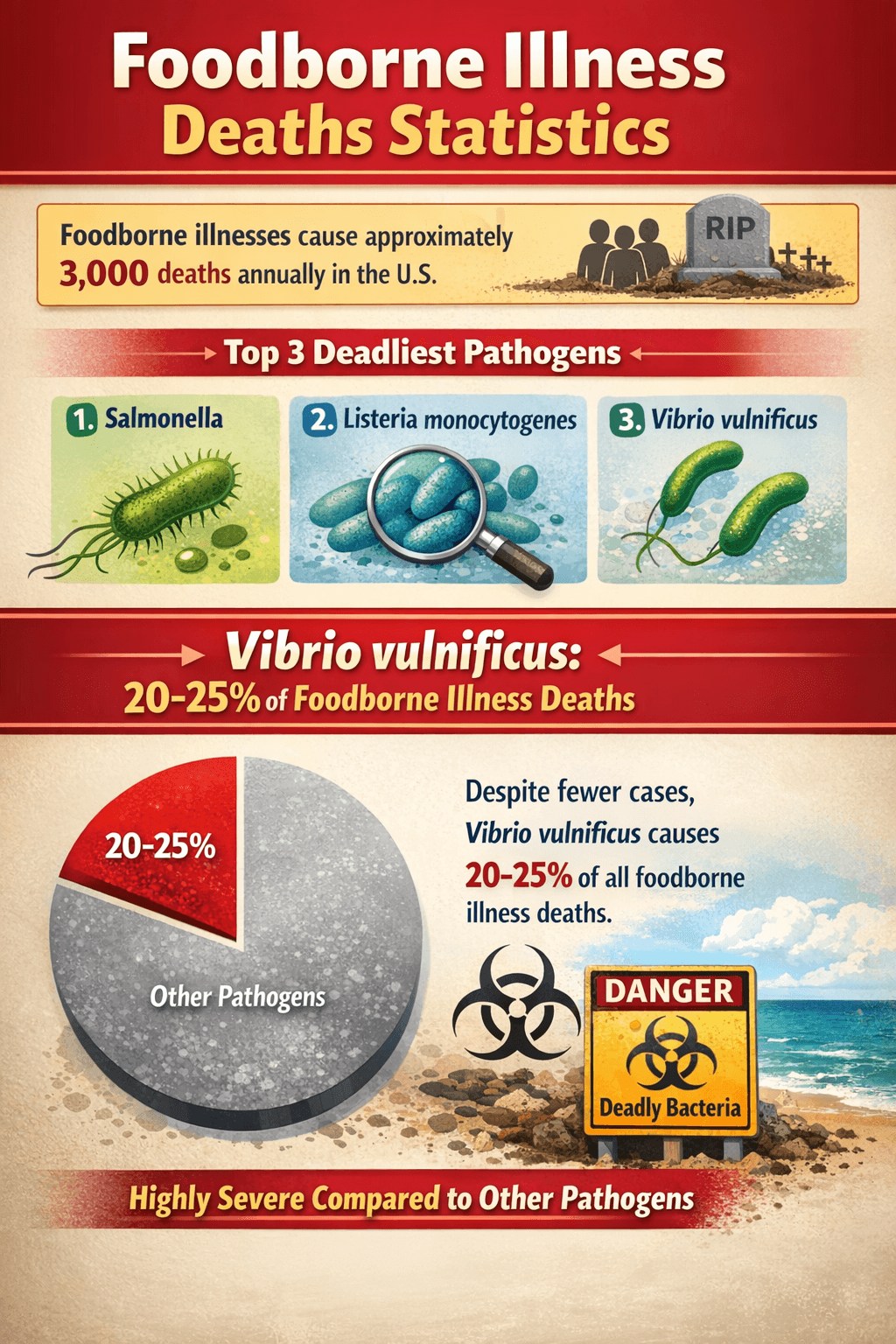
Foodborne illnesses cause approximately 3,000 deaths annually in the U.S.
Top 3 Deadliest Pathogens:
Salmonella
Listeria monocytogenes
Vibrio vulnificus
Vibrio vulnificus alone is responsible for 20-25% of all foodborne illness deaths, despite its relatively low number of cases. This highlights its severity compared to other pathogens.
HOSPITALIZATION RATE
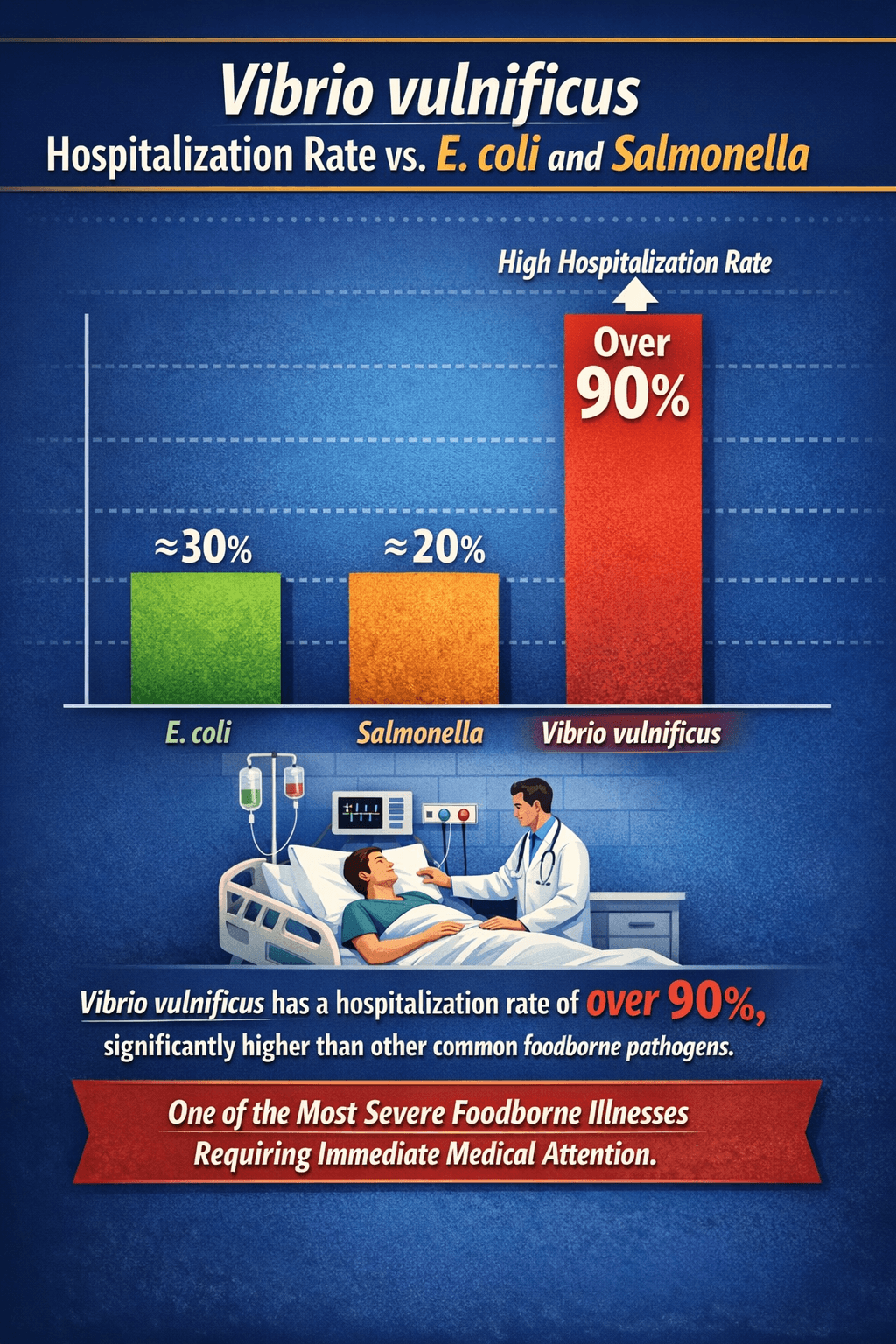
Vibrio vulnificus Hospitalizations vs. E. coli and Salmonella
Vibrio vulnificus has a hospitalization rate of over 90%, significantly higher than other common foodborne pathogens:
E. coli: ~30% hospitalization rate
Salmonella: ~20% hospitalization rate
This makes Vibrio vulnificus one of the most severe foodborne illnesses, requiring immediate medical attention.
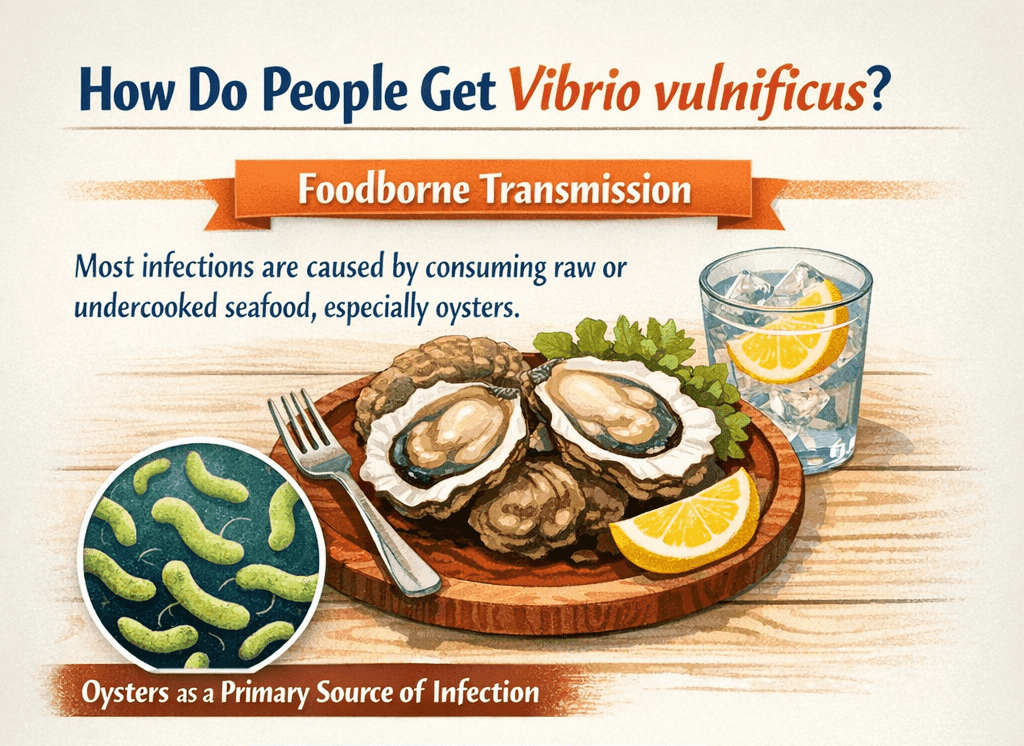
Foodborne Transmission: The majority of Vibrio vulnificus infections are caused by consuming raw or undercooked seafood, particularly oysters. As filter feeders, oysters concentrate naturally occurring bacteria, making them a primary source of infection. This is why understanding the risk of Vibrio in oysters is so important.
Wound Infections: Vibrio vulnificus can also infect open wounds that come into contact with warm, brackish water. While this route of infection is less common, it can lead to severe complications, including necrotizing fasciitis (flesh-eating disease).
Symptoms typically develop rapidly with both types of exposure. You can view a full symptom timeline here.
FREQUENCY OF CASES
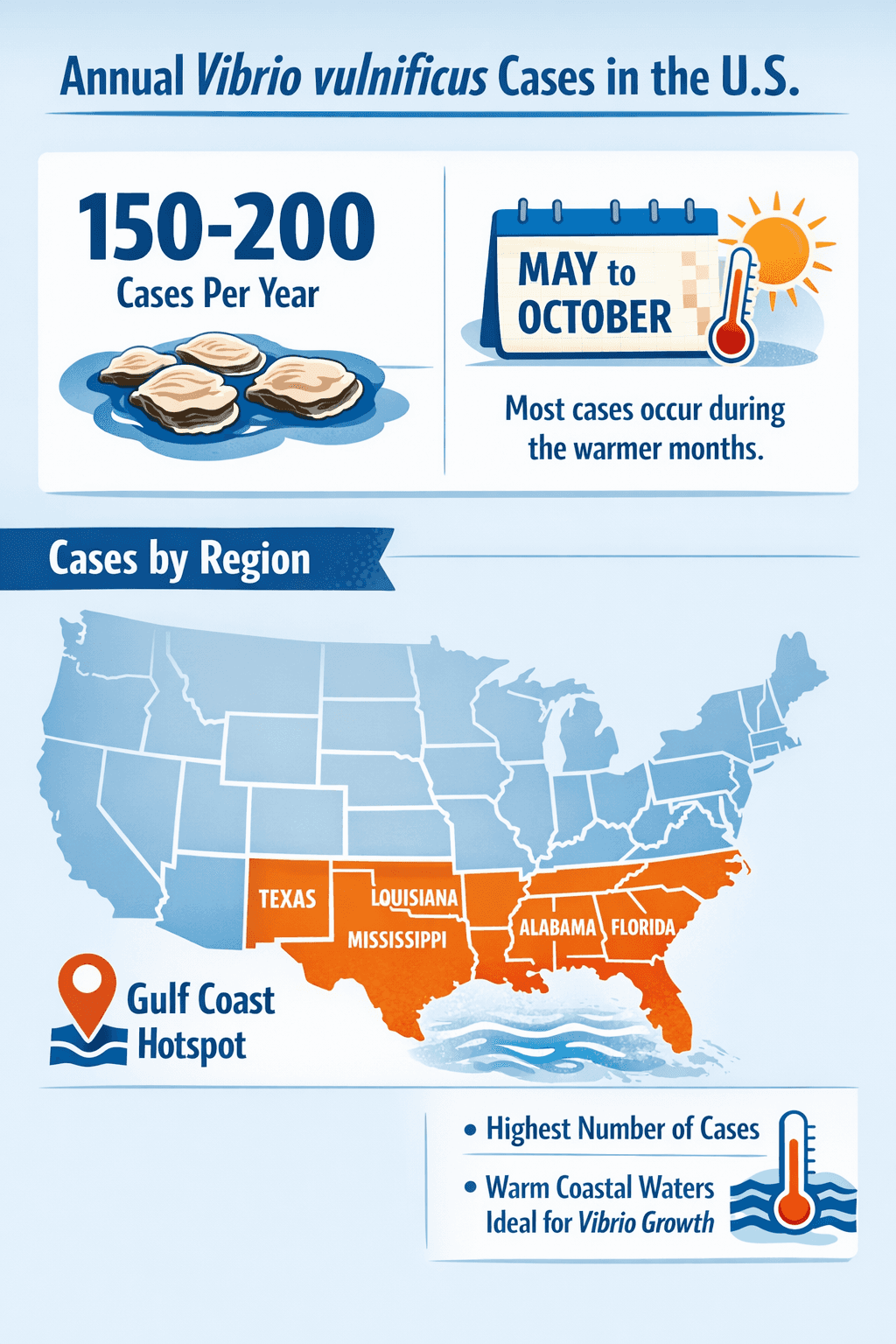
The U.S. reports 150-200 cases of Vibrio vulnificus annually, with most cases occurring during the warmer months (May to October).
Cases by Region
The Gulf Coast region (Florida, Louisiana, Texas, Alabama, and Mississippi) reports the highest number of cases due to its warm coastal waters, which are ideal for Vibrio growth.
OYSTER PREVALENCE
How common is vibrio in oysters? With apologies to all the raw oyster lovers out there, it’s important to understand that Vibrio vulnificus is highly prevalent in raw oysters, particularly during warmer months. Studies have detected the bacteria in up to 97% of oyster samples.
Key clarity (important):
As filter feeders, oysters concentrate naturally occurring bacteria, making raw, undercooked, or improperly handled shellfish a primary source of infection. This prevalence underscores the importance of understanding the risks associated with consuming them.
Who is Most at Risk for Vibriosis?
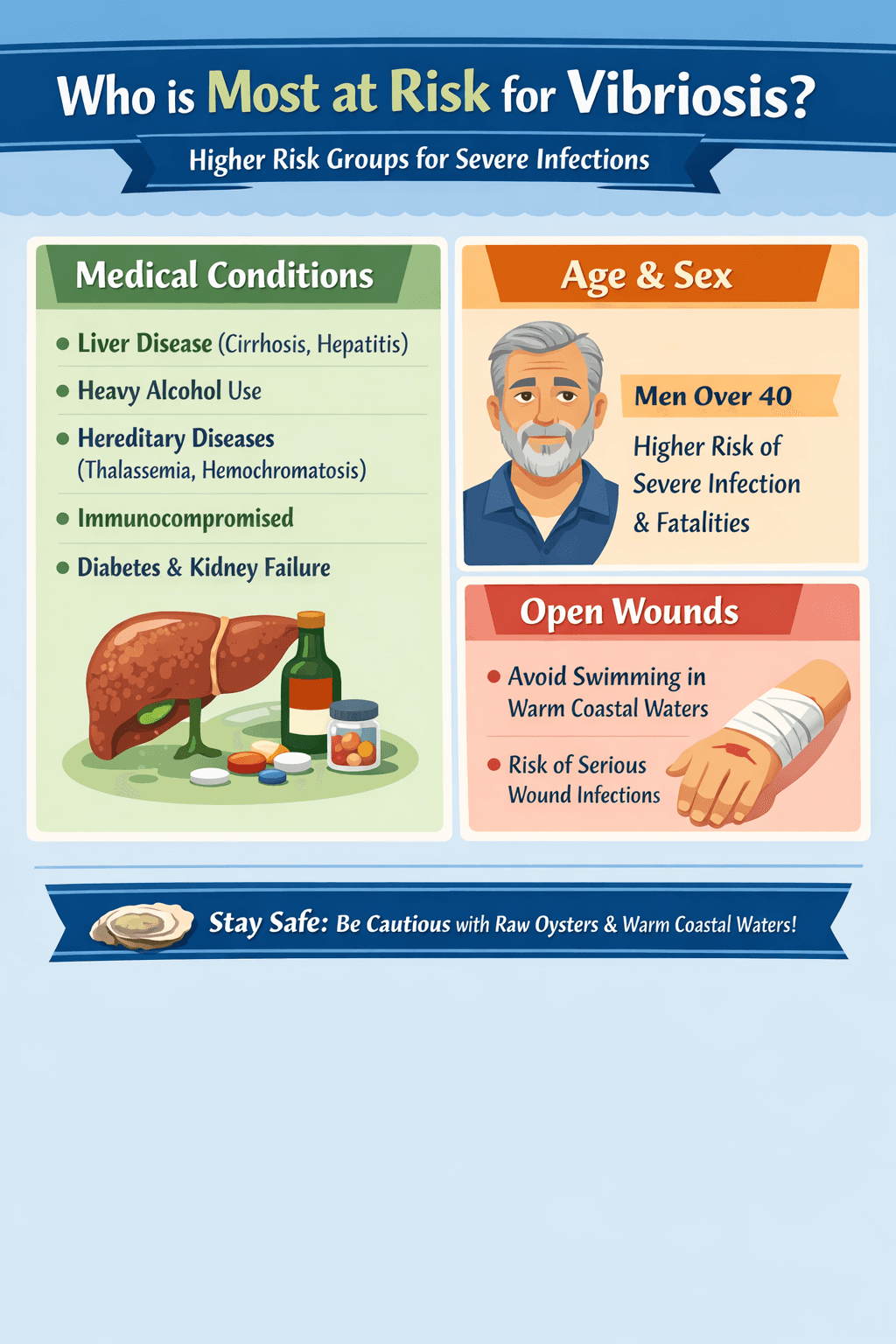
While anyone can get vibriosis, certain groups are at higher risk of severe infections:
Medical Conditions:
Liver diseases (e.g., cirrhosis, hepatitis)
Moderate to heavy alcohol use
Hereditary diseases (e.g., thalassemia, hemochromatosis, Wilson disease)
Immunocompromising conditions
Diabetes
Kidney failure
Age and Sex:
Men over 40 years old are more likely to experience severe infections and fatalities.
Open Wounds:
Anyone with an open wound should avoid swimming in warm coastal waters, as Vibrio vulnificus can infect wounds and cause life-threatening complications.
By understanding these statistics, you can make informed decisions about consuming raw or undercooked oysters and taking precautions in warm coastal waters. We hope this information will help you stay safe while enjoying your seafood! If a severe infection has already happened, you can also learn who may be responsible after a Vibrio vulnificus infection and what to document.
CITATIONS
CDC – Total vibriosis cases: CDC Vibrio Overview
CDC – Severe Vibrio vulnificus cases: CDC Vibrio Overview
Florida Health – Regional cases: Florida Health Vibrio
Houston Methodist – Risk factors and fatalities: Houston Methodist Blog
NBC News – Hospitalization rates: NBC News Flesh-Eating Bacteria
PMC – Prevalence in oysters: PMC Study on Vibrio